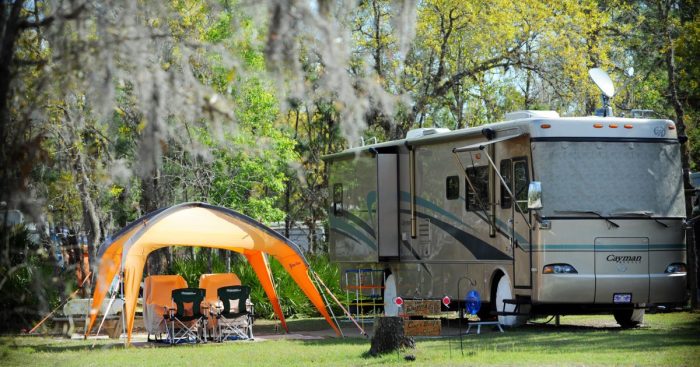
RV Camping Guide: Embark on an unforgettable journey through the world of recreational vehicle camping. This comprehensive guide delves into meticulous trip planning, encompassing destination selection, campsite reservations, and RV preparation. We’ll explore the diverse landscape of RVs, from Class A behemoths to nimble Class B options, helping you choose the perfect vehicle for your needs and budget. Discover breathtaking destinations, learn essential maintenance tips for a safe and smooth trip, and uncover strategies for budget-conscious adventures.
Prepare for an immersive exploration of RV camping, encompassing engaging activities and insightful comparisons with alternative travel styles.
From selecting the ideal RV to mastering essential maintenance tasks and discovering hidden gems, this guide equips you with the knowledge and confidence to embark on a remarkable RV camping experience. We’ll cover everything from choosing the perfect campsite to creating a detailed budget and planning exciting activities, ensuring your adventure is both memorable and stress-free. Whether you’re a seasoned RV enthusiast or a first-timer, this guide is your key to unlocking the boundless possibilities of RV camping.
Alternative Travel Options
Choosing the right travel style depends heavily on your priorities, budget, and travel companions. This section compares RV camping with several other popular travel options, highlighting their advantages, disadvantages, and typical cost structures to help you make an informed decision. Consider your desired level of flexibility, comfort, and interaction with nature when making your choice.
RV Camping Compared to Other Travel Options
| Travel Option | Pros | Cons | Cost Considerations |
|---|---|---|---|
| RV Camping | Flexibility, immersive experience, cost-effective for large groups, pet-friendly, ability to cook your own meals. | Requires driving and maintenance, can be less spontaneous, potential for mechanical issues, limited access to some locations. | Initial investment (RV purchase or rental), fuel, campsite fees, maintenance, food. Costs can vary widely depending on RV type and travel duration. |
| Flight Deals | Fast travel, access to distant destinations, often affordable if booked in advance. | Limited luggage allowance, potential for delays, airport hassles, can be expensive if booked last minute or during peak season, less immersive experience. | Airfare, baggage fees, ground transportation, accommodation, activities. Costs depend on destination, time of year, and booking time. |
| Train Travel | Relaxing, scenic views, convenient for city exploration, often less stressful than flying. | Limited destinations, potentially slower travel times, luggage restrictions, can be expensive depending on route and class of service. | Train tickets, meals, accommodation at destination, activities. Costs depend on distance, train class, and amenities. |
| Cruises | All-inclusive packages, convenient, various onboard amenities, opportunity to visit multiple destinations. | Can be crowded, less flexibility, potential for seasickness, shore excursions can be expensive. | Cruise fare, shore excursions, onboard drinks and activities, gratuities. Costs vary widely depending on cruise line, ship, and itinerary. |
| Road Trips (Car) | Flexibility, scenic routes, relatively inexpensive compared to other options. | Can be tiring, requires driving, limited space, potential for traffic delays. | Fuel, car maintenance, accommodation (hotels or budget options), food, activities. Costs vary greatly depending on distance, vehicle type, and accommodation choices. |
| Budget Accommodations (Hostels, etc.) | Affordable, opportunity to meet other travelers, often located in central areas. | Shared facilities, limited privacy, potential for noise. | Accommodation fees, food, activities. Costs are generally low but vary depending on location and facilities. |
| Vacation Rentals | More space and privacy than hotels, often equipped with kitchens, home-like feel. | Can be more expensive than hotels, may require cleaning, less central location in some cases. | Rental fees, utilities (sometimes), cleaning fees, food. Costs vary based on location, size, and amenities. |
| Hotel Stays | Convenience, amenities (pool, gym, etc.), various price ranges available. | Can be expensive, limited space, lack of kitchen facilities. | Room rate, taxes, potential for additional fees (parking, Wi-Fi). Costs depend on location, hotel class, and amenities. |
| Unique Stays (Treehouses) | Memorable experience, unique accommodation, often in scenic locations. | Can be expensive, limited amenities, potentially inconvenient location. | Accommodation fees, transportation to and from the location, activities. Costs vary greatly depending on location and uniqueness of the stay. |
| Houseboat and Yacht Stays | Luxury experience, unique perspective, access to waterways. | Very expensive, requires boating experience (for some), limited access to land-based activities. | Rental fees (often very high), fuel, maintenance (if applicable), food, docking fees. Costs are significantly higher than other options. |
Target Audience for Each Travel Style
The ideal travel style varies greatly depending on individual preferences and circumstances. For example, RV camping appeals to families, outdoor enthusiasts, and budget-conscious travelers who prioritize flexibility and immersion in nature. Flight deals attract those seeking quick trips to distant destinations, while cruises are popular among those seeking all-inclusive convenience and multiple destinations in one trip. Budget accommodations suit solo travelers or those on a tight budget, whereas luxury options like yacht stays cater to high-end travelers seeking unique and exclusive experiences.
Train travel is appealing to those who value relaxation and scenic views. Road trips and vacation rentals offer a balance between cost-effectiveness and comfort, particularly appealing to families or groups of friends. Unique stays, like treehouses, attract adventurous travelers seeking memorable experiences.
Flight Deals and Hacks
Securing affordable flights is crucial for budget-conscious travelers, especially when planning an extended RV camping trip. Smart planning and utilization of various online tools can significantly reduce your travel expenses, allowing you to allocate more funds towards your camping adventures. This section details strategies for finding and securing the best flight deals.Finding cheap flights involves a combination of strategic searching and understanding how airline pricing works.
Utilizing flight comparison websites and being flexible with your travel dates are key components to success.
Flight Comparison Websites and Fare Structures
Many websites specialize in aggregating flight data from various airlines, allowing you to compare prices easily. Popular options include Google Flights, Skyscanner, Kayak, and Momondo. These sites often display a calendar view showing price fluctuations throughout the month, helping you identify the cheapest days to fly. Understanding fare structures is also important. Basic economy fares typically offer the lowest price but may come with restrictions on baggage and seat selection.
Flexible fares offer more flexibility but usually cost more. Consider your needs and priorities when choosing a fare type.
Maximizing Savings on Flights
Several strategies can help maximize savings. Traveling during off-peak seasons (typically weekdays and shoulder months – periods just before or after peak tourist seasons) usually results in lower fares. Being flexible with your travel dates allows you to capitalize on cheaper days. Consider flying into smaller, less popular airports near your destination; these airports often have lower fares than major international hubs.
Booking your flights in advance, ideally 2-3 months before your departure, can also sometimes lead to better deals, though this isn’t always the case and should be checked against the flexibility option. Finally, consider using airline loyalty programs; accumulating miles can lead to significant savings on future flights.
Finding a Cheap Flight: A Real-World Example
Let’s say you’re planning a trip from New York City (NYC) to Las Vegas (LAS). Using Google Flights, you would enter your departure city (NYC), destination (LAS), and desired travel dates. The calendar view would then display prices for each day of the month. Let’s assume you see significantly lower prices in mid-week of October, rather than peak season in July.
You could then refine your search to focus on those specific dates. The results page would display a list of flights from various airlines, showing the price, duration, number of stops, and airline. You could then compare options based on price, flight duration, and other factors. After selecting your preferred flight, you would be redirected to the airline’s website to complete the booking process.
The screenshot would show a calendar with prices varying across dates, a list of flights with pricing and details, and a summary page before final booking. By meticulously examining these price variations, one could select the most economical option that still suits their needs.
Train Travel Guides
Train travel offers a unique and often overlooked alternative to road trips and flights, providing a scenic and relaxing way to explore various destinations. This guide will equip you with the knowledge to plan efficient and enjoyable train journeys, comparing it to other travel methods and providing a sample itinerary for inspiration.
Planning Train Journeys
Choosing the right train route involves considering several factors. Firstly, identify your starting point and destination. Then, utilize online resources like national railway websites or travel aggregators to compare routes and schedules. Factor in travel time, scenic views (if important), and the frequency of services. Some routes may offer more frequent departures or faster travel times than others.
When booking, consider purchasing tickets in advance, especially during peak season, to secure the best prices and your preferred seating. Many railways offer various ticket types, from standard to first-class, each with its own amenities and price point.
Booking Train Tickets and Essential Packing
Booking train tickets is typically straightforward through online platforms or directly at train stations. Many websites offer detailed information about seat availability, baggage allowances, and any additional services. Remember to check the terms and conditions of your ticket, particularly regarding cancellations and refunds. Packing essentials for a train journey involves considering the length of your trip and the climate of your destination.
Comfortable clothing, a good book or entertainment device, and any necessary medications are recommended. For longer journeys, a travel pillow and snacks can enhance comfort and convenience.
Advantages and Disadvantages of Train Travel
Compared to other modes of transport, train travel offers several advantages. The scenic views from the train window are often unmatched, providing a unique perspective on the landscape. Train travel is generally more relaxing than driving, allowing passengers to sit back, relax, and enjoy the journey. Furthermore, train travel often boasts better sustainability credentials than air travel, producing a lower carbon footprint.
However, train travel also has its disadvantages. Travel times can be longer than flights, and the lack of flexibility in changing routes or schedules can be a drawback. The cost of train travel can also vary significantly depending on the distance, route, and class of travel. For example, a high-speed rail journey might be faster but more expensive than a regional train.
Sample Train Itinerary: Coast Starlight (Los Angeles to Seattle)
This iconic Amtrak route offers a breathtaking journey along the Pacific Coast. The itinerary below highlights key stops and attractions:
| Stop | Attractions | Duration (approx.) |
|---|---|---|
| Los Angeles, CA | Explore Hollywood, visit museums, enjoy the beaches. | 1 day |
| San Luis Obispo, CA | Visit Hearst Castle, enjoy the charming downtown area. | Half-day |
| San Francisco, CA | Explore the Golden Gate Bridge, Alcatraz Island, Fisherman’s Wharf. | 2 days |
| Eugene, OR | Explore the University of Oregon, visit the Saturday Market (if applicable). | Half-day |
| Seattle, WA | Visit the Space Needle, Pike Place Market, explore the waterfront. | 2 days |
This itinerary is a suggestion, and the actual time spent at each location can be adjusted based on individual preferences. Remember to check Amtrak’s website for the most up-to-date schedule and information.
Cruise Ship Reviews and Tips

Cruises offer a unique vacation experience, combining the convenience of all-inclusive amenities with the opportunity to explore multiple destinations. Choosing the right cruise line and ship, however, requires careful consideration of various factors. This section provides reviews of popular cruise lines and offers practical tips to help you plan a memorable and cost-effective cruise.Choosing a cruise line and ship involves weighing several important considerations.
Factors such as the target demographic, the type of activities offered, and the overall ambiance contribute significantly to the overall experience. This section aims to provide insights into some popular choices, highlighting their strengths and weaknesses.
Cruise Line Reviews: Royal Caribbean vs. Carnival
Royal Caribbean International is known for its large, modern ships featuring a wide array of onboard activities, from ice-skating rinks and rock-climbing walls to Broadway-style shows. Their dining options range from casual buffets to elegant specialty restaurants. Customer service is generally considered efficient and helpful, although wait times can be longer on larger ships. Carnival Cruise Line, on the other hand, is known for its more casual and fun-loving atmosphere.
Their ships are generally smaller than Royal Caribbean’s, offering a more intimate experience. While the onboard activities might be less extensive, the focus is on providing a relaxed and enjoyable atmosphere with a lively onboard experience. Dining options are generally more casual, reflecting the overall ambiance of the cruise line. Customer service is generally positive, with a focus on creating a welcoming environment.
Cruise Itinerary Planning and Onboard Experience Maximization
Selecting the right itinerary is crucial for a successful cruise. Consider your interests and desired pace. Caribbean cruises offer warm weather, beautiful beaches, and opportunities for snorkeling and water sports. Mediterranean cruises provide a rich cultural experience, with historical sites and charming towns to explore. Alaska cruises showcase stunning natural beauty, with glaciers, wildlife, and breathtaking scenery.
Once onboard, maximize your experience by researching available activities in advance, making dinner reservations, and participating in onboard events. Familiarize yourself with the ship’s layout to avoid getting lost and make the most of your time. Take advantage of amenities such as the spa, pool, and fitness center to enhance your relaxation and well-being.
Cruise Cost Factors and Deal Finding Strategies
Cruise costs vary greatly depending on the cruise line, ship, itinerary, and cabin type. Factors such as the time of year, length of the cruise, and included amenities also affect the overall price. To find deals, consider booking well in advance or traveling during the shoulder seasons (spring and fall) when prices are generally lower. Look for cruise deals and promotions offered by travel agents and online booking platforms.
Consider booking a less desirable cabin type, such as an inside cabin, to save money. Also, be aware of additional costs such as gratuities, shore excursions, and onboard purchases, which can significantly increase the overall cost. For example, a 7-day Caribbean cruise for two people in an inside cabin during the off-season might cost around $1500, while the same cruise in a balcony cabin during peak season could cost upwards of $4000.
These are estimates and can vary depending on the specific cruise line and itinerary.
Road Trip Guides
Embarking on a road trip offers unparalleled freedom and adventure. Careful planning, however, is key to transforming a potential headache into an unforgettable experience. This guide provides a structured approach to planning your perfect road trip, covering everything from route selection to budgeting and packing. We’ll also explore strategies for maximizing enjoyment along the way.
Choosing a Route and Determining Travel Time
Selecting the optimal route involves considering several factors. The most direct route may not always be the most scenic or enjoyable. Utilize online mapping tools like Google Maps or similar services to compare different routes, factoring in distances, estimated travel times, and points of interest along the way. Consider the time of year; some routes may be impassable or less desirable during certain seasons.
For instance, a mountain pass might be closed due to snow in winter. A trip from New York City to Los Angeles, taking the I-80 route, could take approximately 40 hours of driving time, excluding stops. A more scenic route along the southern states might take significantly longer. Always build in extra time for unexpected delays, such as traffic congestion or necessary repairs.
Budgeting for Road Trip Expenses
Accurate budgeting is crucial. Begin by estimating fuel costs based on your vehicle’s fuel efficiency, the distance you’ll be traveling, and current gas prices. Account for accommodation costs, whether that involves hotels, campgrounds, or Airbnb. Food expenses should be factored in, considering whether you’ll be eating at restaurants or packing your own meals. Allocate funds for activities and attractions along your route.
Don’t forget to include a buffer for unexpected expenses, such as vehicle repairs or unforeseen emergencies. For example, a 1000-mile trip with a vehicle averaging 25 miles per gallon at $4 per gallon would cost approximately $160 in fuel alone.
Packing Essentials for a Smooth Journey
Packing efficiently is vital. Essentials include comfortable clothing suitable for varying weather conditions, toiletries, necessary medications, a first-aid kit, a map or GPS device (ensure it’s fully charged or has offline capabilities), and a roadside emergency kit including jumper cables, a flashlight, and basic tools. Consider bringing entertainment options such as books, podcasts, or downloaded movies for long stretches of driving.
A cooler for food and drinks can save money and ensure you have refreshments readily available. Remember to bring chargers for your electronic devices. A well-stocked car emergency kit can be the difference between a minor inconvenience and a major setback.
Incorporating Interesting Stops and Activities
Transforming your road trip from a mere journey to a memorable adventure involves strategic planning of stops and activities. Research points of interest along your route, including national parks, historical sites, quirky roadside attractions, or local events. Plan for breaks every few hours to stretch your legs and avoid driver fatigue. Incorporating activities such as hiking, exploring small towns, or visiting museums can enhance the overall experience.
For instance, a road trip through the American Southwest might include stops at the Grand Canyon, Zion National Park, and Route 66 landmarks. Spreading out the driving time and integrating these activities into your itinerary ensures a more balanced and enjoyable trip.
Sample Road Trip Itinerary: New York City to Boston
This itinerary focuses on a shorter road trip for illustrative purposes. Travel times are estimates and can vary depending on traffic and chosen route.
| Day | Location | Activities | Estimated Travel Time |
|---|---|---|---|
| Day 1 | New York City to Hartford, CT | Explore NYC before departing; visit the Mark Twain House & Museum in Hartford. | ~2 hours |
| Day 2 | Hartford, CT to Boston, MA | Visit Mystic Seaport in Connecticut; explore Boston’s historical sites and Freedom Trail. | ~2.5 hours |
Budget Accommodation Tips
Securing affordable lodging is crucial for budget-conscious travelers. Smart choices in accommodation can significantly impact your overall trip expenses, freeing up funds for activities and experiences. This section explores strategies for finding and booking budget-friendly accommodations worldwide.Finding and booking affordable accommodation requires a proactive approach and a willingness to explore various options beyond traditional hotels. Several strategies can help you minimize accommodation costs and maximize your travel budget.
Consider factors like location, amenities, and travel dates to optimize your search.
Finding Affordable Accommodation Options
Numerous options exist beyond luxury hotels for travelers seeking budget-friendly stays. Hostels, budget hotels, guesthouses, and vacation rentals offer a range of price points and amenities. Hostels often provide dorm-style rooms or private rooms at lower rates than hotels, fostering a social atmosphere. Budget hotels prioritize affordability, offering basic amenities like comfortable beds and clean bathrooms. Guesthouses provide a more personalized experience, often with locally owned and operated accommodations.
Vacation rentals, such as apartments or houses, offer more space and kitchen facilities, potentially saving on dining expenses. Consider the trade-offs between price, location, and amenities when making your selection.
Strategies for Saving Money on Accommodation
Booking in advance, especially during peak seasons, often secures better rates. Websites and apps dedicated to travel deals frequently offer discounts and promotions on accommodation. Flexibility with your travel dates can also lead to savings, as prices often fluctuate throughout the week and month. Consider off-season travel to access lower prices and avoid crowds. Look for packages that combine accommodation with other travel services, such as flights or tours, to potentially reduce overall costs.
Lastly, always compare prices across multiple booking platforms to ensure you’re getting the best deal.
Examples of Affordable Accommodation in Popular Destinations
In Southeast Asia, hostels and guesthouses in cities like Bangkok and Chiang Mai offer dorm beds for as little as $10-$15 USD per night. Budget hotels in these locations can range from $20-$40 USD per night. For example, in cities like Lisbon, Portugal, you can find charming guesthouses or Airbnb apartments for around $50-$80 USD per night, offering a more local experience.
In South America, budget-friendly hostels in cities like Medellín, Colombia, can offer beds for $10-$20 USD per night. Remember that these are just examples, and prices vary based on season and demand. Always research specific locations and dates to get the most accurate pricing information.
Vacation Rentals and Airbnb
Vacation rentals and Airbnb offer a compelling alternative to traditional hotels, providing a unique blend of home-like comfort and travel flexibility. However, like any accommodation option, they come with their own set of advantages and disadvantages that potential travelers should carefully consider before booking.Choosing between a hotel and a vacation rental often comes down to individual priorities and travel styles.
Vacation rentals generally offer more space, often at a lower cost per person, especially for larger groups. This increased space can significantly enhance the overall travel experience, providing ample room for relaxation and family time.
Advantages of Vacation Rentals and Airbnb
Vacation rentals frequently provide a more authentic and immersive travel experience. Unlike a standardized hotel room, these properties often reflect the local character and culture, offering a glimpse into the everyday life of the area. Furthermore, many vacation rentals come equipped with kitchens, allowing guests to prepare their own meals, saving money and offering greater control over dietary choices.
The added amenities, such as laundry facilities and outdoor spaces, also contribute to a more convenient and comfortable stay. For families, the space and kitchen facilities can be particularly valuable, allowing for a more relaxed and cost-effective trip.
Disadvantages of Vacation Rentals and Airbnb
While vacation rentals offer many benefits, there are also potential drawbacks to consider. One major concern is the lack of consistent service levels compared to hotels. While some hosts provide exceptional support, others may be less responsive or attentive to guest needs. Another potential disadvantage is the variability in property quality and cleanliness. Unlike hotels with standardized cleaning protocols, the quality of a vacation rental can vary significantly depending on the individual host.
Finally, some vacation rentals may lack certain amenities typically found in hotels, such as daily housekeeping or readily available customer service.
Finding and Booking Suitable Vacation Rentals
Finding the perfect vacation rental involves careful research and planning. Begin by identifying your desired location and travel dates. Then, utilize online platforms like Airbnb, VRBO, and Booking.com to browse available properties. Pay close attention to property descriptions, photos, and guest reviews. Reviews provide invaluable insights into the cleanliness, accuracy of the listing, and the responsiveness of the host.
Before booking, thoroughly read the house rules and cancellation policies. Direct communication with the host is crucial to clarify any uncertainties or address specific needs. Asking questions about amenities, check-in procedures, and local recommendations can greatly enhance your overall experience.
Types of Vacation Rentals
The variety of vacation rentals available caters to a wide range of preferences and budgets. Apartments provide a convenient and often centrally located option, offering a blend of privacy and accessibility. Houses offer more space and privacy, perfect for larger groups or families. Cabins provide a rustic and secluded retreat, ideal for those seeking a nature-immersed experience.
Other options include condos, townhouses, and even unique accommodations like yurts or treehouses, each offering a distinctive character and atmosphere. Consider your travel style and group size when selecting the most appropriate type of vacation rental.
Hotel Reviews and Tips: RV Camping Guide
Choosing the right hotel can significantly impact your travel experience. A well-chosen hotel can provide a comfortable and convenient base for exploring your destination, while a poor choice can lead to frustration and inconvenience. This section offers reviews of various hotels and practical tips to help you make informed decisions when booking your accommodation.Hotel selection involves careful consideration of several key factors, including budget, location, amenities, and customer service.
Understanding these elements and utilizing effective booking strategies will contribute to a more enjoyable and stress-free trip.
Hotel Review Examples
This section provides brief reviews of three hotels, highlighting different aspects of the guest experience. These examples showcase the diversity in hotel offerings and the importance of reading reviews before booking.Hotel A: The Grand Plaza Hotel (Luxury) – Located in the heart of the city, this hotel boasts opulent rooms, exceptional service, and a wide range of amenities including a spa, indoor pool, and multiple dining options.
While expensive, guests consistently praise the high level of comfort and personalized service. However, some reviewers mention the price point may be prohibitive for budget travelers.Hotel B: The Comfort Inn (Mid-range) – This hotel offers a comfortable stay at a reasonable price. Its location is convenient, with easy access to public transportation and nearby attractions. Guests generally appreciate the cleanliness and friendly staff.
While amenities are more basic than luxury hotels, it consistently receives positive feedback for its value.Hotel C: The Budget Lodge (Budget) – This hotel provides a basic, functional stay at a very affordable price. While amenities are limited, its location is practical for those on a tight budget who prioritize proximity to their destinations. Reviews highlight the value for money, but some mention that the rooms are smaller and the facilities are less modern than other options.
Tips for Booking Hotels
Effective hotel booking involves utilizing various resources and understanding booking policies. These strategies can help you secure the best possible deal and avoid potential problems.Booking websites such as Expedia, Booking.com, and Hotels.com offer a wide selection of hotels and allow you to compare prices and amenities. Many offer rewards programs and loyalty discounts. Always check multiple websites to compare prices before making a reservation.It is crucial to understand cancellation policies before booking.
Some hotels offer free cancellation up to a certain point, while others may charge a penalty for cancellations. Carefully review the cancellation policy and make sure it aligns with your travel plans. Consider purchasing travel insurance to protect against unforeseen circumstances that might necessitate cancellation.
Factors to Consider When Choosing a Hotel
Several factors should be considered when selecting a hotel, ensuring the choice aligns with your individual needs and preferences. This will help you secure a hotel that enhances your overall travel experience.Budget: Determine your budget before you start searching. Hotel prices vary significantly depending on location, amenities, and time of year. Setting a budget helps you narrow down your options and avoid overspending.Location: Consider the proximity to your planned activities and attractions.
A hotel in a central location may be more convenient but more expensive. A hotel further from the city center might be more affordable but require more travel time.Amenities: Consider what amenities are important to you. Do you need a pool, gym, free Wi-Fi, or on-site parking? Prioritizing your needs helps you find a hotel that caters to your preferences.
Customer Service: Read reviews to assess the hotel’s customer service. Positive reviews regarding helpful and responsive staff can contribute to a more pleasant stay.
Unique Stays and Treehouses
Stepping outside the conventional hotel or motel experience opens up a world of unforgettable adventures. Unique accommodations offer a chance to immerse yourself in the local environment and create lasting memories, far beyond the standard tourist fare. From rustic charm to luxurious glamping, these alternative stays cater to a wide range of preferences and budgets.Choosing a unique stay allows you to connect more deeply with your destination.
Whether it’s waking up to the sounds of nature in a treehouse or experiencing authentic local culture in a yurt, these accommodations offer a richer travel experience. This section explores the various options available, tips for finding the perfect fit, and examples of unique accommodations in popular destinations.
Types of Unique Accommodations
Unique accommodations encompass a diverse range of options, each offering a distinctive character and level of comfort. Treehouses, for instance, provide a whimsical escape nestled amongst the branches, offering stunning views and a connection with nature. Yurts, traditional circular tents originating from Central Asia, provide a comfortable and authentic cultural experience, often featuring comfortable furnishings and stunning natural surroundings.
Glamping, a luxurious form of camping, blends the outdoors with modern amenities, providing comfortable beds, private bathrooms, and other comforts often absent in traditional camping. Other options include converted barns, vintage train cars, lighthouse stays, and even ice hotels in colder climates. Each type offers a distinct experience, allowing travelers to personalize their accommodation to match their travel style and preferences.
Finding and Booking Unique Accommodations
Locating and booking unique accommodations often requires a slightly different approach than traditional hotel bookings. Start by utilizing specialized websites and booking platforms that focus on unique stays. These platforms often feature detailed descriptions, photos, and guest reviews, providing valuable insight into the accommodation’s features and overall experience. Thoroughly read reviews to understand the pros and cons of each property, paying attention to factors such as cleanliness, location, and amenities.
Understand the booking process thoroughly, paying attention to cancellation policies, payment methods, and any additional fees. Contact the property directly if you have questions or require clarification on any aspects of the booking. Remember to book well in advance, especially during peak seasons, to secure your preferred dates and avoid disappointment.
Examples of Unique Accommodations in Popular Destinations
Numerous destinations offer a wealth of unique accommodation options. For example, in the Pacific Northwest of the United States, several resorts offer luxurious treehouse stays with stunning views of the rainforest. In Tuscany, Italy, you might find charming converted farmhouses offering a taste of rural Italian life. The deserts of Arizona and Utah boast glamping resorts with stunning views of the night sky and access to nearby national parks.
Similarly, in Southeast Asia, unique stays in bamboo huts or overwater bungalows are abundant in countries like Thailand and Vietnam, providing a truly immersive cultural experience. These are just a few examples; researching your chosen destination will uncover many more possibilities, allowing you to tailor your accommodation to perfectly complement your travel plans.
Houseboat and Yacht Stays
Embarking on a houseboat or yacht vacation offers a unique blend of adventure and relaxation, allowing you to explore waterways at your own pace and enjoy a level of privacy and comfort not always found in traditional accommodations. However, it’s crucial to weigh the advantages and disadvantages before booking your aquatic getaway.Houseboat and yacht rentals provide a distinctive travel experience, differing significantly from land-based options.
The freedom to cruise at your leisure, explore secluded coves, and wake up to stunning waterfront views are major draws. Conversely, the responsibility of operating a vessel, potential mechanical issues, and weather dependence must be carefully considered.
Advantages and Disadvantages of Houseboat and Yacht Stays
Houseboat and yacht vacations offer a compelling alternative to traditional travel. The advantages include unparalleled freedom and flexibility, the chance to discover hidden waterways, and the luxury of a floating home. However, potential drawbacks include the need for boating experience or the cost of hiring a captain, the responsibility for maintenance and safety, and the potential impact of unpredictable weather conditions.
For instance, a sudden storm could significantly disrupt a planned itinerary, necessitating careful planning and flexibility.
Planning a Houseboat or Yacht Stay, RV camping guide
Choosing the right location is paramount. Consider the type of waterway you prefer – calm lakes, meandering rivers, or open ocean. Research destinations known for their scenic beauty and amenities, such as marinas with access to supplies and services. Factor in the travel time to the rental location and any potential transportation costs to reach the embarkation point.
Budgeting is crucial; rental costs vary significantly depending on the size and type of vessel, the duration of the rental, and the time of year. Remember to factor in fuel costs, mooring fees, and potential maintenance expenses. Booking in advance, particularly during peak season, is highly recommended to secure your preferred dates and vessel.
Types of Houseboats and Yachts Available for Rent
A wide variety of houseboats and yachts cater to diverse preferences and budgets. Smaller houseboats, ideal for couples or small families, offer cozy interiors and are often easier to maneuver. Larger houseboats can accommodate larger groups and offer more amenities, including multiple bedrooms and bathrooms, spacious living areas, and even outdoor decks. Luxury yachts provide a truly opulent experience, often featuring lavish interiors, onboard entertainment systems, and crew members to handle navigation and maintenance.
Some rental companies offer bareboat charters, where renters are responsible for operating the vessel, while others provide crewed charters, offering a captain and potentially a chef. For example, in the Florida Keys, you’ll find a plethora of houseboats ranging from basic models to luxurious options with multiple decks and water sports equipment. Similarly, the Mediterranean offers a vast selection of yachts, from smaller sailing yachts to expansive motor yachts, catering to a wide range of tastes and budgets.
Ultimately, this RV Camping Guide aims to empower you to plan and execute unforgettable RV camping adventures. By understanding the various aspects of RV travel—from meticulous planning and maintenance to budget management and activity selection—you can transform your trip into a truly enriching experience. Embrace the open road, the stunning landscapes, and the camaraderie of fellow travelers, and create memories that will last a lifetime.
Remember, the journey is as important as the destination, so embrace the flexibility and freedom that RV camping offers.
FAQ Explained
What are the common safety concerns while RV camping?
Common safety concerns include propane leaks, fire hazards, carbon monoxide poisoning, and vehicle breakdowns. Regular maintenance and awareness of potential dangers are crucial.
How do I find affordable campsites?
Utilize online resources like RV Parks, explore state and national parks (often more affordable), and consider dispersed camping (where permitted).
What are some tips for minimizing expenses during an RV trip?
Cook your own meals, utilize free Wi-Fi options, and look for discounts on campsites and activities.
What type of insurance do I need for RV camping?
You’ll need liability insurance, comprehensive coverage for the RV itself, and potentially additional coverage for personal belongings.