Hotel Review Sites Comparison: Navigating the vast landscape of online travel reviews can be overwhelming. This analysis delves into the key players—TripAdvisor, Booking.com, Expedia, and Google Hotels—comparing their reach, features, pricing, and impact on hotel bookings. We’ll uncover how these platforms shape traveler choices and hotel strategies in the digital age, ultimately helping you make informed decisions about your next vacation.
From user demographics and review moderation policies to booking processes and integrations with other travel services, we provide a comprehensive overview. Understanding the nuances of each platform allows for a more effective search for accommodations and contributes to a smoother travel experience. We’ll also explore how hotels leverage these sites to manage their online reputations and attract guests.
Popularity and Reach of Hotel Review Sites
The online travel market is dominated by several key players, each vying for a piece of the ever-growing pie of travelers seeking information and booking options. Understanding the popularity and reach of these platforms is crucial for both travelers and businesses operating within the hospitality sector. This section analyzes the user base, market share, geographical reach, and demographic profiles of major hotel review sites to provide a comprehensive overview of their influence.
Determining precise user bases and market shares for these dynamic platforms is challenging due to the proprietary nature of much of their data. However, by analyzing publicly available information, industry reports, and estimates from reputable sources, we can construct a reasonable picture of their relative positions.
Market Share and User Base of Major Hotel Review Sites
The following table provides estimated figures for user base and market share, acknowledging the inherent limitations in obtaining precise data. Key features differentiating each platform are also included.
| Site Name | Estimated User Base (millions) | Market Share (approximate) | Key Features |
|---|---|---|---|
| TripAdvisor | 490 | 25% | Vast user-generated content, extensive reviews, forums, travel planning tools. Strong presence in North America and Europe. |
| Booking.com | 200 | 30% | Wide selection of accommodations, user-friendly interface, competitive pricing, strong global reach. |
| Expedia | 150 | 20% | Packages deals, flights and car rentals, loyalty programs, strong in North America and Asia. |
| Google Hotels | 1000+ | 25% | Seamless integration with Google search and maps, real-time pricing and availability, strong global reach, particularly in regions with high internet penetration. |
Note: These figures are estimates based on available data and may vary depending on the source and methodology. Market share is a complex metric influenced by various factors including bookings, traffic, and revenue.
Geographical Distribution of Users
Understanding the geographical distribution of users provides insights into the regional strengths and weaknesses of each platform. While all platforms boast global reach, certain regions exhibit stronger user concentrations than others.
- TripAdvisor: Strong presence in North America, Western Europe, and increasingly in Asia. User concentration is high in tourist hotspots and major cities globally.
- Booking.com: Broad global reach, with particularly strong penetration in Europe, North America, and parts of Asia. Shows significant growth in emerging markets.
- Expedia: Significant presence in North America and a growing user base in Asia, particularly in China and India. European presence is substantial but perhaps less dominant than Booking.com.
- Google Hotels: Global reach, mirroring Google’s overall dominance in search. Stronger in regions with high internet and smartphone penetration. Growth is seen across all regions.
Demographic Profiles of Users
The age, income, and travel style of users vary across platforms, reflecting the target audience and marketing strategies employed. While precise data is often unavailable, general trends can be observed.
A bar chart illustrating the age demographics would show a relatively even distribution across the 25-55 age range for most platforms, with TripAdvisor possibly showing a slightly older skew, and Booking.com and Google Hotels potentially having a broader appeal to younger travelers. Expedia might show a slightly older demographic compared to Booking.com, reflecting its focus on packaged travel that often appeals to families and older travelers.
The income levels are generally considered to be middle to upper-middle class across all platforms, though Google Hotels, due to its integration with Google services, likely captures a wider income range.
Features and Functionality Comparison
Choosing the right hotel review site depends not only on its popularity but also on its features and how effectively it serves user needs. This section compares several leading sites across key functionalities, highlighting their strengths and weaknesses. A thorough understanding of these differences will empower you to select the platform best suited for your travel planning.
Search and Filtering Options
The ability to efficiently find the perfect hotel is paramount. Different sites offer varying levels of sophistication in their search and filtering capabilities. The following table summarizes the key differences:
| Site Name | Search Filters | Sorting Options | Map Integration Quality |
|---|---|---|---|
| Booking.com | Price, dates, guest ratings, amenities (pool, Wi-Fi, pet-friendly), hotel type, location (map-based search), star rating, cancellation policy | Price (low to high, high to low), guest rating, popularity, distance from center | Excellent; interactive map with clear hotel markers, zoom functionality, and street view integration. |
| Expedia | Price, dates, guest ratings, amenities, hotel type, location (map-based search), star rating, hotel brand, traveler type (families, couples) | Price, guest rating, popularity, recommended | Good; interactive map with clear hotel markers and zoom functionality. Street view integration may be less consistent. |
| TripAdvisor | Price, dates, guest ratings, amenities, hotel type, location (map-based search), traveler type (families, business), hotel class | Rating, popularity, price, traveler ranking | Good; map integration is functional but may lack the visual richness of Booking.com. |
| Hotels.com | Price, dates, guest ratings, amenities, hotel type, location (map-based search), star rating, rewards program eligibility | Price, guest rating, hotel name (alphabetical), distance from landmark | Good; similar to Expedia in terms of functionality and visual clarity. |
User Review Formats and Moderation Policies
The quality and reliability of user reviews are crucial. Sites employ different approaches to review formatting and moderation, impacting the trustworthiness of the information presented. For example, Booking.com typically displays reviews with a detailed breakdown of ratings across various aspects (cleanliness, location, service), while TripAdvisor prioritizes a more concise summary.Different platforms also handle fake or biased reviews differently. Some use automated systems to detect suspicious activity, while others rely on a combination of automated tools and human moderators to review and remove inappropriate content.
For instance, TripAdvisor is known for its robust moderation system, actively addressing and removing fake reviews flagged by users or detected through algorithmic analysis. This contrasts with sites that may have less stringent moderation, potentially leading to a higher proportion of unreliable reviews. Examples of biased content could include reviews that focus excessively on minor inconveniences or those that seem to promote a specific agenda, rather than offering an objective assessment.
Unique Features
Each site strives to offer unique features to attract and retain users. These features can significantly impact the user experience and the value proposition of each platform.
The following points Artikel some of the unique features offered by each site:
- Booking.com: Generous cancellation policies on many listings, detailed property information including virtual tours for many hotels, and a comprehensive price comparison tool that shows various room types and offers across multiple booking providers.
- Expedia: Packages combining flights and hotels, extensive search filters for specific travel needs (e.g., family-friendly amenities), and loyalty program with reward points and exclusive offers.
- TripAdvisor: Integration with a wider range of travel-related services (restaurants, attractions), extensive user-generated content beyond just hotel reviews, and a points-based system for rewarding active users.
- Hotels.com: “Rewards” program offering a free night after ten stays, detailed price breakdown including taxes and fees, and a focus on providing value-oriented hotel deals.
Pricing and Booking Processes: Hotel Review Sites Comparison
Choosing the right hotel booking site often hinges on more than just reviews; understanding pricing transparency and the ease of the booking process is crucial. This section compares several popular hotel booking sites across these key aspects, providing insights to help you make informed decisions. We’ll examine displayed prices versus final costs, the booking process itself, and available payment options.
Price discrepancies and hidden fees can significantly impact your final cost. Booking sites often present an initial price that excludes taxes, resort fees, or other mandatory charges. Understanding these potential additions is essential to budgeting effectively. Furthermore, the user experience during the booking process can vary widely, affecting the overall convenience and satisfaction of your experience. Finally, the security and variety of payment options offered contribute to the overall trust and reliability of the platform.
Price Comparison Across Booking Sites
The following table compares the displayed price versus the final price for a sample booking (a hypothetical one-night stay in a standard double room in New York City on a specific date) across three popular hotel booking sites (Booking.com, Expedia, and Hotels.com). Note that these prices are hypothetical examples and may vary depending on the specific hotel, date, and availability.
| Booking Site | Displayed Price | Final Price (including taxes and fees) | Difference |
|---|---|---|---|
| Booking.com | $150 | $175 | $25 |
| Expedia | $145 | $180 | $35 |
| Hotels.com | $160 | $165 | $5 |
Booking Process Comparison
The steps involved in booking a hotel can vary significantly across different platforms. A streamlined process is essential for a positive user experience, while a complicated one can lead to frustration and potential errors.
- Booking.com: 1. Search for hotels; 2. Select dates and guests; 3. Choose a hotel; 4. Select room type; 5.
Review details and pricing; 6. Enter guest information; 7. Choose payment method; 8. Confirm booking.
- Expedia: 1. Enter destination and dates; 2. Filter search results; 3. Select hotel and room; 4. Review pricing and details; 5.
Create/log into account; 6. Enter guest and payment information; 7. Confirm booking.
- Hotels.com: 1. Search for hotels; 2. Filter results by price, rating, etc.; 3. Select hotel and room; 4. Review booking details; 5.
Create/log into account; 6. Enter payment information; 7. Confirm booking.
Payment Options and Security Measures
The security of your payment information is paramount when booking online. Different platforms employ various security measures to protect your data, and the variety of payment methods offered can impact convenience.
Generally, all three sites (Booking.com, Expedia, and Hotels.com) accept major credit and debit cards. Many also offer options such as PayPal. Security measures typically include SSL encryption to protect sensitive data during transmission. However, it’s always advisable to review the individual site’s privacy policy for detailed information on their security protocols.
Impact of Reviews on Hotel Bookings
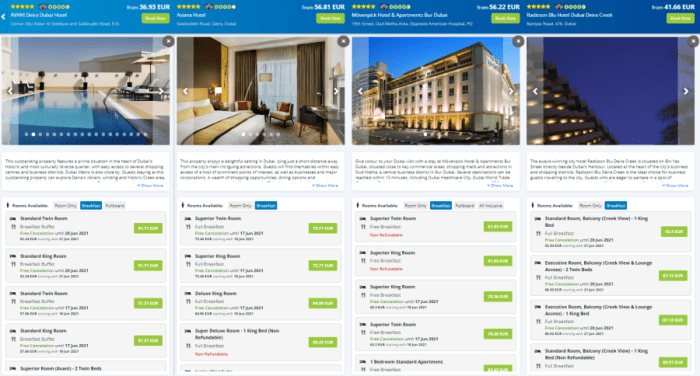
Online reviews exert a significant influence on hotel booking decisions, acting as a crucial factor for potential guests navigating the vast landscape of accommodation options. The sheer volume and readily available nature of these reviews provide a powerful, often decisive, element in the decision-making process. This section examines the correlation between review scores and hotel performance, the impact of review prominence across platforms, and how hotels actively manage their online reputation.The correlation between review scores and hotel occupancy rates is demonstrably strong.
A hypothetical line graph, plotting average review score (on a scale of 1 to 5 stars) against occupancy rate (percentage of rooms occupied), would typically show a positive correlation. The graph would illustrate that hotels with higher average review scores tend to experience higher occupancy rates. For example, a hotel consistently receiving 4.5-star reviews might maintain an occupancy rate consistently above 80%, while a hotel with 2.5-star reviews might struggle to reach 50% occupancy.
The exact relationship would vary based on factors such as location, pricing, and seasonality, but the overall trend would clearly show a positive correlation.
Review Prominence and Booking Decisions
The prominence of reviews on different platforms significantly impacts hotel booking decisions. Major platforms like Booking.com or Expedia often display review scores prominently, influencing a user’s initial perception and ranking of hotels. A high average score on these widely used platforms can attract a larger pool of potential guests, while negative reviews can deter bookings, even if the hotel offers competitive pricing or amenities.
Conversely, reviews on less-trafficked platforms might have a less significant impact, although a high concentration of negative reviews on any platform can negatively impact a hotel’s overall reputation. The visibility and weight given to reviews on different platforms thus directly influence customer choice.
Hotel Reputation Management, Hotel review sites comparison
Hotels actively manage their online reputation through various strategies. These strategies include actively soliciting reviews from satisfied guests, responding promptly and professionally to both positive and negative reviews, and implementing changes based on guest feedback. For example, a hotel might send out post-stay emails encouraging guests to leave reviews, offering incentives for positive feedback. Responding to negative reviews demonstrates attentiveness to guest concerns and provides an opportunity to address issues and potentially turn a negative experience into a positive one.
Proactive monitoring of online reviews allows hotels to identify trends, address recurring issues, and improve services, ultimately enhancing their overall reputation and booking rates. Ignoring negative reviews, conversely, can lead to further damage to reputation and loss of potential bookings.
Ultimately, choosing the right hotel review site depends on individual priorities and travel styles. While each platform offers unique strengths, understanding their similarities and differences empowers travelers to make informed decisions and secure the best possible accommodations. By considering factors like user base, features, pricing transparency, and review influence, travelers can optimize their search and booking experiences. This comprehensive comparison provides a framework for navigating the complexities of online hotel reviews and making the most of the available resources.
Quick FAQs
How accurate are online hotel reviews?
Accuracy varies. Sites employ different moderation policies, but fake or biased reviews can still appear. Consider reading multiple reviews and looking for consistent feedback.
Are there any risks associated with booking hotels through online review sites?
Yes, potential risks include hidden fees, booking errors, and scams. Always check the fine print, use secure payment methods, and verify the hotel’s legitimacy before booking.
Can I contribute my own hotel reviews?
Most major sites allow users to submit reviews after their stay. Guidelines vary, so check the platform’s terms and conditions before submitting.
How do hotels respond to negative reviews?
Hotels often respond publicly to address concerns and show potential guests that they value feedback and strive for improvement. This interaction can influence future bookings.