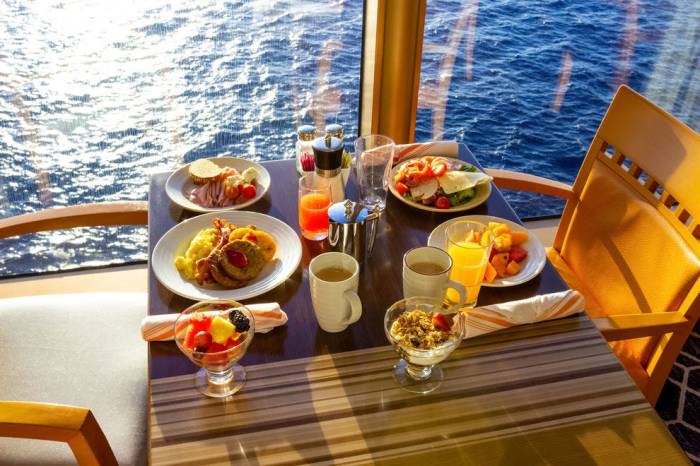
Cruise Ship Dining Experiences and Reviews offer a fascinating glimpse into a world of culinary delights and service standards at sea. From lavish buffets to intimate specialty restaurants, the dining experience significantly impacts a cruise’s overall appeal. This exploration delves into the diverse options, analyzes passenger reviews, and examines how dining choices influence the overall cruise satisfaction.
We will compare various cruise lines, highlighting their unique culinary offerings and service styles. We’ll analyze both positive and negative reviews to identify common themes and patterns regarding food quality, service, and ambiance. The impact of dining on passenger satisfaction will be examined through case studies, and we’ll explore how cruise lines cater to special dietary needs and the differences between luxury and budget cruise dining.
Luxury vs. Budget Cruise Dining
The dining experience is a significant aspect of any cruise, and the differences between luxury and budget cruises are stark. While both offer the opportunity to enjoy meals at sea, the quality, service, and overall atmosphere vary considerably, impacting the overall vacation experience. This comparison explores the key distinctions between these two cruise categories in terms of their culinary offerings.Luxury cruise lines prioritize exceptional dining experiences as a core component of their premium service.
Budget lines, on the other hand, focus on providing functional and palatable meals within a more cost-effective framework. Understanding these differences helps potential cruisers make informed choices based on their preferences and budgets.
Menu Offerings and Culinary Styles
Luxury cruise lines often feature multiple specialty restaurants, each with a distinct theme and cuisine. Expect to find options ranging from fine dining with tasting menus and Michelin-starred chefs to casual eateries offering regional specialties. The ingredients used are typically high-quality and sourced responsibly. In contrast, budget cruise lines usually offer a main dining room with a rotating menu, often featuring more traditional and internationally-familiar dishes.
While palatable, the focus is on providing satisfying meals rather than sophisticated culinary experiences. Specialty dining may be available at an extra cost, but the options are typically fewer and less elaborate than on luxury lines. For example, a luxury line might boast a Japanese teppanyaki restaurant, a French bistro, and an Italian trattoria, while a budget line might offer only a single steakhouse or Italian option at an upcharge.
Service Styles and Ambiance
The service style mirrors the overall dining experience. Luxury cruises prioritize personalized and attentive service. Waitstaff are highly trained, anticipate guest needs, and often remember preferences from previous meals. The ambiance is refined and elegant, often featuring sophisticated décor, fine linens, and impeccable presentation. Budget lines, while providing courteous service, generally offer a more casual and less personalized experience.
The dining rooms may be less ornate, with a more functional atmosphere. While the staff are generally helpful, the level of personalized attention is typically less pronounced. For example, on a luxury cruise, you might find your waiter remembering your preferred wine or recommending dishes based on your past choices. On a budget cruise, the service is more standardized and less individualized.
Cost and Quality Comparison
The following table summarizes the cost and quality differences between luxury and budget cruise dining:
| Feature | Luxury Cruise | Budget Cruise |
|---|---|---|
| Cost per meal (excluding specialty dining) | Included in fare, high overall cost | Included in fare, lower overall cost |
| Specialty dining cost | High, but extensive options | Moderate to high, limited options |
| Menu variety and quality of ingredients | Extensive, high-quality ingredients | Limited, standard ingredients |
| Service style | Highly personalized and attentive | Courteous but less personalized |
| Ambiance | Elegant and refined | Functional and casual |
Related Travel Topics: Cruise Ship Dining Experiences And Reviews
Planning a cruise is exciting, but don’t forget the journey to get there! Securing affordable and convenient flights is a crucial part of the overall travel experience, significantly impacting your budget and overall enjoyment. This section will explore strategies and resources for finding the best flight deals and implementing effective travel hacks.Finding the best flight deals requires a combination of strategic planning and utilizing available tools.
Several factors influence airfare pricing, making it essential to understand the market dynamics and employ effective searching techniques. This includes understanding peak travel seasons, the timing of your booking, and leveraging the power of flight aggregators and comparison websites.
Flight Deal Websites and Apps
Numerous websites and mobile applications specialize in aggregating flight deals from various airlines. These platforms allow for easy comparison shopping and often highlight discounted fares or special offers. Using these resources effectively can save you significant money on your airfare.
- Google Flights: A comprehensive search engine that allows for flexible date searching and price tracking.
- Skyscanner: Another powerful aggregator that searches across a wide range of airlines and travel agencies.
- Kayak: Similar to Skyscanner and Google Flights, Kayak offers a user-friendly interface for comparing flight options.
- Momondo: Known for its comprehensive search results and often uncovering hidden deals.
- Hopper: This app predicts flight prices and suggests the best time to book for optimal savings.
Strategies for Finding the Best Flight Deals
Timing is crucial when booking flights. Generally, booking in advance (2-3 months prior) or at the last minute (a week or less) can sometimes yield better deals, although this isn’t always guaranteed. Mid-week flights (Tuesday and Wednesday) are often cheaper than weekend flights. Being flexible with your travel dates can also significantly impact the price. Consider flying during the off-season or shoulder seasons to avoid peak travel periods.Using flight aggregators effectively involves experimenting with different search parameters.
Try searching for nearby airports, exploring alternative dates, and considering connecting flights, which often provide cheaper options than direct flights. Remember to check baggage fees separately, as these can significantly add to the overall cost.
Tips for Saving Money on Flights
Packing light is a simple yet highly effective way to save money. Many airlines charge extra for checked baggage, so packing efficiently can avoid these additional costs. Consider traveling with a carry-on bag only.Budget airlines offer significantly lower fares compared to full-service carriers. However, it’s important to weigh the trade-offs, as budget airlines often charge extra for amenities like seat selection, meals, and baggage.
Carefully evaluate the total cost, including any additional fees, before choosing a budget airline.
Consider using a travel rewards credit card to accumulate points or miles that can be redeemed for flights or other travel expenses.
Related Travel Topics: Cruise Ship Dining Experiences And Reviews
Train travel offers a unique and often more scenic alternative to air or car travel, providing a relaxing and immersive journey. This guide explores the practicalities and pleasures of exploring the world by rail.
Train Travel Booking and Route Selection
Booking train tickets in advance, especially for popular routes or during peak season, is highly recommended to secure the best fares and seat availability. Many national and international railway companies offer online booking systems, allowing for easy comparison of prices and schedules. Consider factors such as journey duration, frequency of services, and the comfort level offered by different classes of service.
Websites such as Seat61.com provide comprehensive information on train routes and booking options worldwide. When choosing a route, research the scenery along the way. Many lines offer breathtaking views, making the journey itself a highlight of the trip.
Essential Packing for Train Journeys
Packing efficiently is crucial for comfortable train travel. A comfortable backpack or small rolling suitcase is ideal, allowing for easy maneuverability on and off trains and through stations. Essential items include comfortable clothing suitable for varied temperatures, a reusable water bottle, snacks, a good book or e-reader, a portable charger for electronic devices, and any necessary medications. Consider including a travel pillow for added comfort on longer journeys.
Noise-canceling headphones can also significantly enhance the travel experience.
Scenic Train Journeys Around the World
Numerous scenic train journeys offer unforgettable travel experiences. The Canadian Rockies’ Rocky Mountaineer offers stunning views of mountain ranges, glaciers, and rivers. Passengers can enjoy luxurious accommodations and gourmet meals onboard. The Trans-Siberian Railway, spanning across Russia, presents a journey through diverse landscapes, from vast Siberian plains to the Ural Mountains. The Glacier Express in Switzerland winds its way through the Swiss Alps, showcasing breathtaking mountain vistas and charming villages.
The Bernina Express, also in Switzerland, offers a similar experience with panoramic views of glaciers and lakes.
Comparison of Train Travel with Other Transportation Modes, Cruise Ship Dining Experiences and Reviews
| Feature | Train Travel | Air Travel | Car Travel |
|---|---|---|---|
| Speed | Moderate | Fast | Variable, often slower |
| Cost | Variable, can be competitive | Can be expensive | Variable, dependent on fuel prices and distance |
| Comfort | Generally comfortable, especially in first class | Can be cramped | Can be tiring on long journeys |
| Scenery | Often offers scenic views | Limited views from the air | Allows for flexibility in route and stops |
| Convenience | Direct routes to city centers often available | Requires travel to and from airports | Offers door-to-door service |
| Environmental Impact | Generally lower carbon footprint than air travel | High carbon footprint | Moderate carbon footprint, dependent on vehicle efficiency |
Related Travel Topics: Cruise Ship Dining Experiences And Reviews
Embarking on a road trip offers a unique travel experience, providing flexibility and the opportunity to explore hidden gems often missed during other forms of travel. This section delves into the planning and execution of a successful road trip, focusing on a specific region and providing practical tips and resources.
Pacific Coast Highway Road Trip: California
This itinerary focuses on a classic American road trip: a journey down California’s iconic Pacific Coast Highway (Highway 1). The route offers breathtaking coastal views, charming towns, and diverse attractions. The suggested duration is 7-10 days, allowing ample time for exploration and relaxation.
Suggested Route and Attractions
The trip begins in San Francisco, offering iconic landmarks like the Golden Gate Bridge and Alcatraz Island. From there, the route follows Highway 1 southward, passing through picturesque towns like Monterey (known for its aquarium and 17-Mile Drive), Big Sur (renowned for its dramatic cliffs and redwood forests), and San Simeon (home to Hearst Castle). Further south, travelers can explore Santa Barbara’s Spanish architecture and beaches before reaching Los Angeles, offering a vibrant city experience with diverse attractions.
Potential detours include exploring Yosemite National Park (requiring extra time) or venturing inland to experience the beauty of the Californian deserts.
Accommodation Options
Accommodation options along the Pacific Coast Highway range from budget-friendly motels and campsites to luxurious resorts and boutique hotels. Booking in advance, especially during peak season, is highly recommended. Consider factors such as proximity to attractions, amenities, and budget when choosing accommodation. Websites like Booking.com, Expedia, and Airbnb offer a wide range of options.
Road Trip Planning Tips
Effective road trip planning is crucial for a smooth and enjoyable experience. A well-defined budget, including fuel, accommodation, food, and activities, is essential. Packing efficiently is also key; prioritize essential items and consider weather conditions. Regular vehicle maintenance checks, including tire pressure and fluid levels, are vital for safety. It’s advisable to inform someone of your itinerary and expected return time.
Useful Apps and Websites
Several apps and websites can significantly enhance the road trip experience. Navigation apps like Google Maps and Waze provide real-time traffic updates and alternative routes. Booking platforms such as Booking.com and Expedia facilitate accommodation reservations. Roadside assistance services, like AAA (in the US), offer peace of mind in case of unexpected vehicle issues. GasBuddy can help find the cheapest gas prices along the route.
Finally, weather apps provide crucial information for adapting to changing conditions.
Related Travel Topics: Cruise Ship Dining Experiences And Reviews
Finding affordable accommodation is crucial for budget travelers, allowing them to allocate more funds towards experiences and activities. This section explores various budget-friendly lodging options and strategies for securing the best deals.
Budget Accommodation Options
Budget travelers have a variety of choices beyond expensive hotels. Hostels, guesthouses, and budget hotels each offer unique advantages and disadvantages. Hostels often provide dorm-style rooms, fostering a social atmosphere and generally being the most economical option. Guesthouses, usually smaller independently-owned properties, offer a more personalized experience, sometimes with breakfast included. Budget hotels provide private rooms at a lower cost than luxury hotels, but amenities might be more limited.
Advantages and Disadvantages of Budget Accommodation Types
| Accommodation Type | Advantages | Disadvantages |
|---|---|---|
| Hostels | Very affordable, social atmosphere, often centrally located | Shared rooms and facilities, potential for noise, less privacy |
| Guesthouses | Personalized service, often includes breakfast, charming atmosphere | Limited amenities, may not be centrally located, fewer rooms available |
| Budget Hotels | Private rooms, basic amenities, often chain affiliated for consistency | Fewer amenities than luxury hotels, potentially less character |
Finding Deals and Discounts on Accommodation
Securing discounted accommodation requires proactive planning and research. Booking in advance, especially during peak seasons, often yields lower prices. Loyalty programs offered by hotel chains or booking websites can provide points or discounts on future stays. Utilizing price comparison websites allows for a side-by-side review of prices across multiple platforms. Consider traveling during the shoulder seasons (periods before and after peak seasons) for potentially lower rates.
Finally, be flexible with your travel dates; prices can fluctuate significantly even within a week. For example, a last-minute booking might surprisingly offer a better rate than an earlier reservation, though this is not always the case.
Related Travel Topics: Cruise Ship Dining Experiences And Reviews
Vacation rentals and Airbnb accommodations have become increasingly popular alternatives to traditional hotels for travelers seeking a more home-like experience. Both offer unique advantages and disadvantages, and the best choice depends largely on individual travel style and preferences. Understanding these differences is key to selecting the ideal lodging for your next trip.
Vacation Rentals versus Airbnb Accommodations
Vacation rentals and Airbnb are often used interchangeably, but there are subtle differences. Vacation rentals typically involve renting an entire property, often a house or condo, directly from an owner or management company. Airbnb, on the other hand, is a platform connecting travelers with a wider range of hosts offering various types of accommodation, from private rooms to entire homes.
While vacation rentals tend to offer more space and privacy, Airbnb provides greater flexibility and a broader selection of properties. Vacation rentals may offer more consistent amenities and property management, while Airbnb’s decentralized nature can lead to more variability in quality and service.
Factors to Consider When Booking a Vacation Rental or Airbnb
Choosing the right accommodation requires careful consideration of several factors. Location is paramount; proximity to attractions, transportation, and amenities greatly impacts the overall experience. Amenities such as a kitchen, Wi-Fi, and parking are crucial for comfort and convenience. Thoroughly reviewing past guest feedback is essential; ratings and comments provide valuable insights into cleanliness, responsiveness of the host, and overall satisfaction.
The size and type of accommodation should match the needs of your travel party. Checking the cancellation policy is vital, particularly when booking in advance or for uncertain travel plans. Finally, verifying the host’s legitimacy and ensuring secure payment methods are crucial for a safe transaction.
Tips for a Safe and Enjoyable Stay in a Vacation Rental or Airbnb
Prior to arrival, clear communication with the host regarding check-in procedures, house rules, and local recommendations is highly recommended. Upon arrival, take photos documenting the condition of the property, noting any existing damage or issues. Familiarize yourself with the location of safety features such as fire extinguishers and smoke detectors. Be mindful of security; lock doors and windows when leaving, and consider using door locks or security systems if available.
Respect the property and its surroundings; adhere to house rules and leave the property as you found it. In the event of any problems during your stay, communicate promptly with the host to resolve issues amicably. Remember to leave a fair and honest review after your stay to help future travelers.
Related Travel Topics: Cruise Ship Dining Experiences And Reviews
Choosing the right hotel can significantly impact your overall travel experience. Hotel review websites offer a wealth of information to help you make informed decisions, ensuring a comfortable and enjoyable stay. Understanding how to effectively utilize these resources and considering key factors will greatly enhance your hotel booking process.Effective Use of Hotel Review WebsitesHotel review websites, such as TripAdvisor, Booking.com, Expedia, and Google Hotels, provide a platform for travelers to share their experiences.
These reviews, when analyzed effectively, can reveal valuable insights into a hotel’s strengths and weaknesses. Searching by location, dates, price range, and specific amenities (like pet-friendliness or pools) allows you to narrow your search and focus on hotels that meet your specific criteria. Filtering reviews by star rating, length of stay, or travel type can further refine your search results.
Pay close attention to both positive and negative reviews to get a balanced perspective. Look for recurring themes or common complaints, as these can indicate systemic issues rather than isolated incidents.
Essential Factors to Consider When Reading Hotel Reviews
Before booking, carefully review several aspects of the hotel. Cleanliness is paramount; look for comments on the condition of rooms, bathrooms, and common areas. Read about the quality of service, paying attention to staff responsiveness, helpfulness, and professionalism. Location is also crucial; consider proximity to attractions, transportation, and restaurants. Check for mentions of noise levels, particularly if you are a light sleeper.
Amenities, such as Wi-Fi speed and reliability, breakfast options, and fitness facilities, should also be considered. Finally, review comments on the value for money; did the hotel meet expectations given its price?
Tips for Getting the Best Value for Your Money When Booking a Hotel Room
Booking well in advance, especially during peak seasons, can often secure better rates. Consider traveling during the off-season or shoulder season for lower prices and fewer crowds. Utilize hotel loyalty programs to accumulate points and earn rewards, such as free nights or upgrades. Compare prices across multiple booking websites to ensure you’re getting the best deal. Look for special offers or packages that may include additional amenities, such as free breakfast or airport transfers.
Be flexible with your travel dates; prices often fluctuate throughout the week. Consider alternative accommodations such as boutique hotels or vacation rentals, which may offer unique experiences at competitive prices. Finally, read the fine print carefully before booking to understand cancellation policies and any hidden fees.
Related Travel Topics: Cruise Ship Dining Experiences And Reviews
Stepping beyond the confines of a cruise ship, exploring unique and memorable accommodations can significantly enhance your overall travel experience. This section delves into the world of alternative lodging, focusing on the charm and adventure offered by unique stays like treehouses and glamping. These options provide a captivating contrast to traditional hotels, offering a deeper connection with nature and a more immersive travel experience.
Unique Accommodation Options
Many options exist for travelers seeking accommodations beyond the standard hotel room. These unique stays offer a diverse range of experiences, catering to various preferences and budgets. From rustic charm to luxurious comfort, the possibilities are extensive.
- Treehouses: Imagine waking up to the sounds of birdsong, surrounded by the lush canopy of a forest. Treehouses offer a whimsical and secluded escape, often featuring rustic designs with modern amenities. Some offer breathtaking views, private balconies, and even hot tubs. The experience is truly immersive, allowing guests to connect with nature in a unique way.
- Yurts: Originating from nomadic cultures in Central Asia, yurts are portable, circular tents traditionally made of felt and wood. Modern yurts often incorporate comfortable furnishings and amenities, providing a unique blend of traditional charm and modern comfort. They offer a secluded and peaceful setting, perfect for those seeking a connection with nature without sacrificing comfort.
- Glamping Sites: Glamping, a portmanteau of “glamorous camping,” combines the outdoorsy experience of camping with the comforts of a luxury hotel. Options range from safari tents with plush beds and private bathrooms to luxurious cabins nestled in scenic locations. Many glamping sites offer additional amenities such as fire pits, hot tubs, and gourmet meal options.
- Unique Boutique Hotels: Beyond the aforementioned options, many boutique hotels offer unique and themed experiences. These hotels often feature distinctive designs, curated amenities, and personalized service, creating a memorable and personalized stay. Examples include hotels built within castles, converted barns, or even repurposed lighthouses.
Experiences Offered by Unique Accommodations
The experiences offered by unique accommodations go far beyond a simple place to sleep. They often include immersive activities and unique amenities that enhance the overall travel experience.
Treehouses, for instance, can offer unparalleled views and a sense of seclusion. Many are located in areas with abundant wildlife, providing opportunities for birdwatching or nature walks. Yurts, with their nomadic heritage, can provide a cultural immersion, while glamping sites often offer access to outdoor activities such as hiking, kayaking, or fishing. Boutique hotels, depending on their theme and location, may offer curated experiences such as wine tasting, cooking classes, or historical tours.
Tips for Booking and Planning a Unique Stay
Planning a stay in a unique accommodation requires some advance preparation.
Early booking is crucial, especially during peak seasons, as availability for these unique properties is often limited. Thoroughly researching the location and amenities is essential to ensure it aligns with your preferences and expectations. Reading reviews from previous guests can provide valuable insights into the experience. Finally, confirming cancellation policies and understanding any specific rules or guidelines associated with the accommodation is vital for a smooth and enjoyable stay.
For example, some treehouses may have weight restrictions, while glamping sites may have specific guidelines regarding campfires or pets.
Related Travel Topics: Cruise Ship Dining Experiences And Reviews
Houseboats and yachts offer unique vacation experiences, each with its own set of advantages and disadvantages. Choosing between the two depends heavily on personal preferences, budget, and the type of vacation desired. This section will explore the key differences to help you make an informed decision.
Houseboat versus Yacht Stays: A Comparison
Houseboats generally provide a more relaxed and family-friendly atmosphere. They are typically larger and offer more living space, often including multiple bedrooms and bathrooms, a fully equipped kitchen, and spacious living areas. Yachts, on the other hand, tend to be more luxurious and focused on speed and maneuverability. While some yachts offer ample living space, many prioritize elegance and performance over sheer size.
Houseboats are usually rented for a longer period, offering a slower-paced exploration of waterways, while yacht charters often involve shorter durations, focusing on specific destinations or activities. Houseboats are better suited for exploring calm inland waterways and lakes, whereas yachts are more versatile, capable of navigating both calm waters and open seas.
Factors to Consider When Booking a Houseboat or Yacht Stay
Choosing between a houseboat and yacht stay requires careful consideration of several factors. The decision should be based on your travel style, budget, and desired level of luxury.
Before booking, it’s crucial to evaluate:
- Location: Consider the desired waterway and proximity to attractions. Houseboats are ideal for exploring lakes and rivers, while yachts offer access to coastal areas and open ocean.
- Amenities: Assess the available amenities, including sleeping arrangements, kitchen facilities, bathroom amenities, entertainment systems, and onboard equipment (e.g., fishing gear, water sports equipment).
- Price: Houseboat rentals typically cost less than yacht charters, particularly for longer stays. However, prices vary greatly depending on the size, amenities, and location.
- Seasonality: Weather conditions can significantly impact the enjoyment of both houseboat and yacht stays. Research the best time to visit your chosen location, considering factors like temperature, water conditions, and potential crowds.
- Experience Level: Houseboats generally require less experience to operate than yachts, especially if a captain is provided. If you are inexperienced with boating, renting a houseboat with a captain or choosing a simpler yacht charter might be preferable.
Ensuring a Safe and Enjoyable Houseboat or Yacht Stay
Safety and enjoyment are paramount when embarking on a houseboat or yacht vacation. Preparation and adherence to safety guidelines are essential.
To ensure a safe and enjoyable experience, remember to:
- Check the weather forecast: Before and during your stay, monitor weather conditions and adjust your plans accordingly. Strong winds or storms can pose significant risks.
- Understand the vessel’s operation: If you’re operating the vessel yourself, receive proper training and familiarize yourself with all safety equipment and procedures. If you are chartering a yacht, be sure to have the captain explain all safety procedures before departing.
- Pack appropriately: Pack suitable clothing, sunscreen, insect repellent, and any necessary medications. For houseboats, consider bringing items for entertainment, such as books or games. For yachts, pack light, elegant clothing for evenings.
- Respect the environment: Dispose of waste properly and avoid disturbing wildlife. Adhere to all local regulations and guidelines regarding boating and water activities.
- Inform someone of your itinerary: Share your travel plans with a friend or family member, including your planned route, estimated return time, and emergency contact information.
Ultimately, the cruise ship dining experience is a multifaceted element significantly impacting the overall passenger journey. Understanding the diverse options available, the range in quality across price points, and the importance of catering to diverse dietary needs provides a comprehensive picture. By analyzing passenger reviews and the strategies employed by cruise lines, we gain valuable insights into what constitutes a memorable and satisfying culinary adventure at sea.
FAQs
What are the typical tipping customs on cruise ships for dining staff?
Tipping practices vary, but generally, a daily per-person gratuity is automatically added to your onboard account for dining room and other services. You can adjust this amount if desired, and additional tips for exceptional service are always appreciated.
Are there options for room service on cruise ships?
Yes, most cruise lines offer 24-hour room service, although there might be limited menus or extra charges depending on the time of day or the specific item ordered.
How far in advance should I book specialty dining reservations?
Specialty restaurant reservations are highly recommended, especially for popular venues. Booking as soon as your cruise is confirmed is advisable to secure your preferred time slots.
Can I request a specific table location in the main dining room?
While some cruise lines may accommodate specific table requests, it’s not always guaranteed. It’s best to discuss preferences with your dining host or cruise concierge upon embarkation.