How to Use Flight Alerts for Deals unveils the secrets to securing incredible flight deals. This guide delves into the world of flight alert services, empowering you to navigate the complexities of finding and booking affordable airfare. From understanding different alert types and optimizing your search settings to interpreting alerts and utilizing advanced techniques, we’ll equip you with the knowledge to transform your travel planning.
We’ll explore various flight alert providers, comparing their features and benefits to help you choose the best service for your needs. Learn how to craft effective search strategies, leveraging flexible dates and destinations to uncover hidden savings. We’ll also guide you through the process of evaluating flight offers, booking your flights, and even utilizing complementary resources like price tracking tools and flight comparison websites.
Understanding Flight Alert Services: How To Use Flight Alerts For Deals
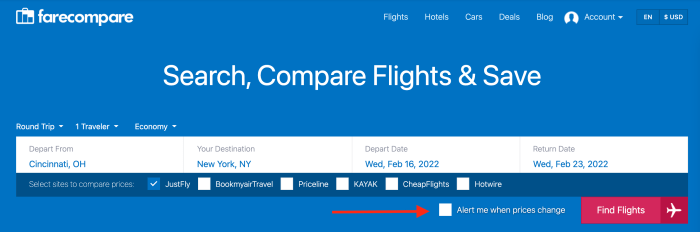
Flight alert services are invaluable tools for savvy travelers seeking affordable airfare. They automate the process of searching for and notifying you of price drops or newly available flights matching your specified criteria, saving you time and potentially a significant amount of money. Understanding the nuances of these services will help you maximize their effectiveness.
Types of Flight Alert Services
Several types of flight alert services cater to different needs and preferences. These generally fall into two main categories: those integrated into larger travel booking platforms and those offered as standalone services. Integrated services often offer more comprehensive travel planning features beyond just flight alerts, while standalone services may focus solely on providing the most accurate and timely flight price updates.
Some services offer both email and mobile app notifications, while others may focus on one or the other.
Features and Benefits of Flight Alert Services
The core benefit of any flight alert service is the time saved by eliminating the need for constant manual searches. Features vary, but many services allow users to specify parameters such as origin and destination airports, travel dates (flexible or fixed), number of passengers, and preferred airlines. Advanced features may include price tracking graphs, fare predictions based on historical data, and the ability to set multiple alerts for different trips.
Some services also incorporate features such as baggage tracking and real-time flight status updates.
Comparison of Flight Alert Providers
Numerous providers offer flight alert services, each with its own strengths and weaknesses. Consider factors such as the accuracy of their price updates, the comprehensiveness of their search parameters, the user-friendliness of their interface, and the reliability of their notifications when choosing a provider. Some providers may excel at finding deeply discounted fares, while others may offer a wider range of features or better customer support.
The best choice depends on individual priorities.
Setting Up Flight Alerts: A Step-by-Step Guide
Setting up flight alerts is generally straightforward. Below is a guide for three popular providers (Note: Specific steps may vary slightly depending on the provider’s interface updates):
| Provider | Step 1: Account Creation/Login | Step 2: Setting Alert Parameters | Step 3: Confirmation and Notification Preferences |
|---|---|---|---|
| Google Flights | Create a Google account or log in. | Enter your origin and destination airports, travel dates (or date range), number of passengers, and any other preferences (cabin class, airlines, etc.). | Review your alert settings and choose your preferred notification method (email, app notifications). |
| Skyscanner | Create a Skyscanner account or log in. | Enter your origin and destination, travel dates, and passenger details. You can also set price alerts or save searches. | Confirm your alert settings and select your notification preferences. |
| Kayak | Create a Kayak account or log in. | Enter your origin and destination, travel dates, and passenger information. You can also filter results by airline or cabin class. | Review your alert settings and select your notification method. You can manage your alerts in your account settings. |
Optimizing Flight Alert Settings for Best Results
Setting up effective flight alerts is crucial for finding the best flight deals. By strategically configuring your search parameters, you significantly increase your chances of uncovering hidden bargains and saving money on your travel plans. This involves understanding how to effectively use flexible dates, destinations, and advanced filtering options offered by most flight alert services.
Crafting successful flight alert searches relies on a combination of precise specification and strategic flexibility. Overly restrictive searches might miss great deals, while overly broad searches can overwhelm you with irrelevant results. The key is to find the right balance.
Specifying Flexible Dates and Destinations, How to Use Flight Alerts for Deals
Flexibility is paramount when searching for flight deals. Rigidly adhering to specific dates often limits your options and increases the price. Instead, consider expanding your travel window by a few days, or even a week, on either side of your preferred dates. Similarly, exploring nearby airports or alternative destinations can dramatically increase your chances of finding lower fares.
For example, if you’re flying to London, consider airports like Gatwick or Luton in addition to Heathrow. A slightly longer drive might be worth the considerable savings on airfare. Similarly, if your primary destination is a large city, consider nearby smaller cities or towns that might offer cheaper flights and still be within reasonable travel distance.
Utilizing Advanced Search Filters to Refine Results
Most flight alert services offer advanced search filters to refine your results. These filters allow you to specify preferences such as preferred airlines, maximum number of stops, cabin class (economy, business, first), and even specific flight times. Using these filters effectively can significantly reduce the number of irrelevant alerts you receive, focusing your attention on flights that truly meet your needs and preferences.
For instance, filtering for non-stop flights will eliminate connecting flights, even if they are cheaper, if you prioritize convenience. Similarly, specifying a preferred airline can help you accumulate frequent flyer miles if that’s important to you.
Sample Flight Alert Searches for Different Travel Scenarios
Creating targeted flight alerts for different scenarios requires tailoring the search parameters to your specific needs.
Here are a few examples:
Last-Minute Trip (within 2 weeks): Search for flights from your origin city to a flexible destination within a 2-week window. Prioritize low fares and accept connecting flights if necessary. This approach is best suited for travelers who are flexible about their destination and can travel on short notice. A search for “Flights from New York to Europe (flexible dates, within 2 weeks)” would be an example.
Long-Haul Flight: Specify your origin and destination cities, and allow for flexibility of +/- 3 days around your preferred travel dates. Use advanced filters to select preferred airlines and cabin class. Consider setting alerts for both direct and connecting flights, weighing convenience against cost. A sample search could be “Flights from New York to Sydney, Australia (flexible dates, +/- 3 days, economy, any airline)”.
Family Vacation: Search for flights for multiple passengers, specifying the number of adults and children. Consider flexible dates and possibly nearby airports to find the best deal. Prioritize direct flights or flights with minimal layovers to minimize travel stress with children. An example would be “Flights from Chicago to Orlando, Florida (flexible dates, 2 adults, 2 children, direct flights preferred)”.
Interpreting and Responding to Flight Alerts
Receiving a flight alert is exciting, but it’s crucial to approach it with a discerning eye. Not every alert signifies a genuine bargain. Understanding how to differentiate between a truly good deal and a potentially misleading notification is key to saving money and avoiding disappointment. This section will guide you through the process of evaluating flight alerts and efficiently booking your flights.
The influx of flight alerts can be overwhelming. Many factors influence pricing, and a seemingly great deal might not be as advantageous as it initially appears. Careful analysis of the offer’s details is necessary to avoid impulsive bookings that might ultimately prove costly.
Identifying Genuine Deals from Misleading Alerts
Identifying genuine flight deals requires a critical assessment of several factors. Look beyond the headline price and consider the total cost, including baggage fees, seat selection charges, and any other potential add-ons. Compare the price to historical data for the same route. Websites like Google Flights offer price trend graphs, providing valuable context. Be wary of alerts that pressure you into immediate action, often indicating a less-than-ideal offer.
Legitimate deals usually offer a reasonable booking window.
Evaluating Flight Offer Price and Terms
Before committing to a booking, use a checklist to ensure the offer aligns with your travel needs and budget.
- Price Comparison: Check the price against other travel sites and directly with the airline. Consider using metasearch engines to compare across multiple platforms.
- Baggage Fees: Note any baggage fees, and factor them into the total cost. Some airlines have surprisingly high baggage charges.
- Seat Selection: Check if seat selection is included or incurs extra costs. Preferential seating can add significantly to the overall expense.
- Cancellation Policy: Carefully review the cancellation policy and any associated fees. Understanding the terms protects you in case of unexpected changes to your travel plans.
- Travel Dates and Times: Verify the dates and times align with your schedule. Inflexible travel dates often result in higher fares.
Booking a Flight After Receiving a Suitable Alert
Once you’ve identified a suitable flight offer, act swiftly, as prices can fluctuate rapidly. However, don’t rush into a booking without confirming all the details.
- Double-check the details: Verify all flight details, including departure and arrival times, airport codes, and baggage allowance, before proceeding to payment.
- Read the terms and conditions: Carefully read the terms and conditions of the booking, paying close attention to cancellation policies and baggage fees.
- Securely complete the booking: Use a secure website or app for the transaction, ensuring your payment details are protected.
- Receive confirmation: Obtain a confirmation email or booking reference number as proof of purchase.
Airline Booking vs. Third-Party Platform
Choosing between booking directly with an airline or using a third-party platform depends on individual preferences and priorities.
- Booking Directly with the Airline:
- Often offers better customer service and easier management of bookings.
- May offer better deals directly, especially for frequent flyers.
- Provides more control over booking modifications.
- Booking with a Third-Party Platform:
- Can offer a wider range of options and price comparisons.
- May provide bundled deals, such as flights and hotels.
- Can be less convenient for managing bookings and resolving issues.
Advanced Techniques for Finding Flight Deals
Successfully using flight alerts is a great start to finding cheap flights, but mastering advanced techniques can significantly increase your chances of securing truly exceptional deals. This section explores strategies that go beyond simply setting up alerts, focusing on how to leverage various tools and techniques to maximize your savings.
Using Flight Comparison Websites with Flight Alerts
Flight comparison websites act as powerful search engines, aggregating flight data from numerous airlines and travel agencies. Using them in conjunction with flight alerts allows for a multi-pronged approach. Set up alerts for your desired routes on your preferred alert service, then periodically cross-reference the alerted prices with the current prices displayed on comparison websites like Google Flights, Skyscanner, Kayak, or Momondo.
This helps you verify the accuracy of the alert and identify potential discrepancies, ensuring you’re not missing better deals offered elsewhere. For example, a flight alert might show a price increase, but a comparison website might reveal a lower fare from a different airline or agency not included in your initial alert setup. This comparison adds a layer of validation and helps you identify the absolute best price available.
Leveraging Price Tracking Tools for Flight Price Monitoring
While flight alerts notify you of price changes, dedicated price tracking tools provide a more granular view of price fluctuations over time. These tools, often integrated into comparison websites or available as standalone apps, allow you to monitor specific flights continuously. By observing price trends, you can identify patterns and predict potential price drops. For instance, a price tracking tool might show a consistent downward trend for a particular flight over several weeks, allowing you to strategically wait for the best moment to book.
Conversely, it might highlight a sudden price surge, prompting you to book immediately if the current price still aligns with your budget.
Strategies for Finding Hidden Deals and Avoiding Booking Pitfalls
Finding hidden deals requires a blend of flexibility and strategic thinking. Consider adjusting your travel dates by a day or two, as prices can vary significantly even within a short timeframe. Be open to flying to alternative airports near your destination, as this can often lead to lower fares. Also, explore budget airlines, which may not always be included in standard flight alert services.
Avoiding common pitfalls involves booking directly with airlines whenever possible to avoid hidden fees, comparing total prices (including baggage fees and other add-ons) rather than just base fares, and carefully reviewing cancellation policies before committing to a booking. Lastly, be wary of overly attractive deals, as they might involve hidden costs or less reputable vendors.
Supplementary Resources for Finding Flight Deals
Utilizing additional resources significantly enhances your flight-finding capabilities. These tools provide valuable insights and options that complement flight alerts:
- Google Flights Explore: This tool allows you to search for flights based on your budget and flexibility, showing you destinations within your price range.
- Skyscanner’s Price Alerts: Similar to other alert services, but often provides a wider range of options and airlines.
- Scott’s Cheap Flights (Subscription Service): This service proactively identifies and emails users about exceptionally cheap flight deals.
- Hopper (App): This app uses predictive analytics to forecast flight prices, helping you determine the optimal time to book.
- Momondo: A comprehensive flight comparison website with robust search capabilities.
Mastering the art of using flight alerts can significantly reduce your travel costs. By understanding the nuances of different services, optimizing your search parameters, and critically evaluating offers, you’ll unlock a world of affordable travel opportunities. Remember to leverage complementary resources and consider alternative travel options to maximize your savings. With the right knowledge and strategy, your next adventure is within reach – at a fraction of the cost.
User Queries
How often should I check my flight alerts?
While alerts notify you, regularly checking (daily or every other day) ensures you don’t miss time-sensitive deals.
What if a flight alert shows a great price, but the airline website shows a higher price?
Double-check the dates, times, and passenger numbers. The alert might be outdated or from a third-party site with different fees.
Are flight alerts free?
Most basic flight alert services are free, but some premium services offer advanced features for a subscription fee.
Can I set alerts for multiple destinations at once?
Yes, most services allow you to create multiple alerts with different destinations and dates simultaneously.